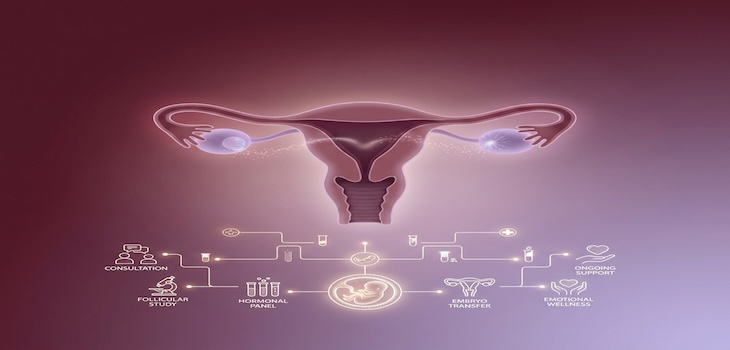
Many patients come across terms such as fimbrial block, egg rupture, follicle rupture, or tube blockage while trying to understand why pregnancy has not happened.
These terms can sound confusing because they refer to different parts of the fertility process. Egg rupture is linked to ovulation. Fimbrial block is linked to the fallopian tube and whether the released egg can be picked up properly.
For pregnancy to happen naturally, ovulation, sperm movement, fallopian tube function and fertilisation all need to work together. If the egg is released but the tube cannot pick it up, or if the fimbrial end of the tube is blocked, pregnancy may become more difficult.
At Janini IVF, Delhi, these findings are reviewed as part of a complete fertility assessment. A fertility clinic will usually look at ovulation pattern, fallopian tube status, ovarian reserve, semen analysis, age and previous treatment history before advising the next step.
Fimbrial block means that the end part of the fallopian tube near the ovary may be blocked, damaged or not functioning normally.
The fimbriae are small finger-like projections at the end of the fallopian tube. Their role is to help pick up the egg after ovulation and guide it into the tube. If this end of the tube is blocked or damaged, the egg may not enter the tube properly.
This can affect natural conception because fertilisation usually happens inside the fallopian tube.
Fimbrial block is a type of fallopian tube-related problem.
A fallopian tube can be blocked at different points. Some blockages may be closer to the uterus, while others may be near the outer end of the tube, closer to the ovary. Fimbrial block refers to a problem near the fimbrial end of the tube.
This area matters because it is involved in picking up the egg after ovulation. Even if ovulation is happening, the egg still needs to be picked up by the fallopian tube for natural fertilisation to happen.
Pregnancy may still be possible in some situations, but it depends on the full fertility picture.
This may depend on:
whether one or both tubes are affected
whether the other tube is open and functioning
whether ovulation is happening regularly
ovarian reserve
semen analysis
age
pelvic history
whether there are other fertility factors
If one tube is affected and the other tube is open and healthy, pregnancy may still be possible. However, if both fimbrial ends are blocked or the tubes are damaged, natural conception can become more difficult.
A fertility clinic assessment can help clarify whether monitoring, IUI, IVF or another approach may be suitable.
Fimbrial block can happen when the outer end of the fallopian tube is affected by infection, inflammation, scarring or damage.
Possible causes may include:
previous pelvic infection
pelvic inflammatory disease
endometriosis
previous pelvic or abdominal surgery
pelvic adhesions
hydrosalpinx
previous ectopic pregnancy
tuberculosis-related pelvic disease, where relevant
long-standing inflammation around the tubes
Sometimes a patient may not have obvious symptoms. The issue may only be found during fertility testing.
Yes, pelvic adhesions can sometimes affect the fallopian tubes and fertility.
Pelvic adhesions are bands of scar-like tissue that can form after infection, surgery, inflammation or endometriosis. If adhesions form near the ovaries or fallopian tubes, they may affect how the tube moves or how the fimbriae pick up the egg.
This is why tubal function is not only about whether the tube is technically open. The tube also needs to work properly.
If pelvic adhesions are suspected, the fertility specialist may review symptoms, scan findings, previous surgery history, infection history and any earlier fertility test results.
Many patients use the term egg rupture when they are asking about ovulation.
Clinically, this usually refers to follicle rupture. During ovulation, a mature follicle in the ovary opens and releases the egg. The egg is then picked up by the fimbriae of the fallopian tube.
So, when a doctor says that egg rupture has happened, it usually means ovulation has occurred.
Yes, in most patient conversations, “egg rupture” usually means ovulation.
More accurately, the follicle ruptures and releases the egg. The egg itself does not “burst.” The follicle, which is the small fluid-filled structure in the ovary that contains the egg, opens to release it.
This is why the term follicle rupture is often more medically accurate than egg rupture. However, many patients search for “egg rupture meaning,” so it is useful to understand both terms.
After egg rupture or follicle rupture, the egg is released from the ovary.
The nearby fallopian tube needs to pick up the egg. The fimbriae help sweep the egg into the tube, where fertilisation may happen if sperm are present.
If fertilisation happens, the early embryo then travels towards the uterus.
This process depends on ovulation, sperm health and fallopian tube function. If the fimbrial end of the tube is blocked or damaged, egg pickup may be affected.
Yes, pregnancy can happen after egg rupture if the other fertility factors are favourable.
For pregnancy to happen naturally:
ovulation should occur
sperm should be present at the right time
at least one fallopian tube should be open and functioning
the fimbriae should be able to pick up the egg
fertilisation should happen in the tube
the embryo should move towards the uterus
If egg rupture is happening but pregnancy is not occurring, the fertility specialist may assess other factors such as semen analysis, tubal status, ovulation pattern, ovarian reserve and age.
If the follicle does not rupture, the egg may not be released. This means ovulation may not have happened in that cycle.
This may be seen in some ovulation-related concerns. In fertility treatment, follicle monitoring may be used to check whether a follicle is growing and whether ovulation appears to have occurred.
If the follicle is growing but not rupturing, the fertility specialist may review hormone patterns, cycle history, PCOS-related concerns and previous treatment response.
Treatment depends on the cause and the overall fertility plan.
The fallopian tubes matter because natural fertilisation usually happens inside the tube.
After ovulation, the egg needs to be picked up by the fimbrial end of the tube. Sperm also need to travel through the uterus and into the tube. If fertilisation happens, the embryo then needs to move back towards the uterus.
If the tube is blocked, damaged or not functioning normally, this process may be affected.
This is why tubal testing is often advised when a couple has been trying to conceive without success.
IUI may not be suitable if the fimbrial block affects the only functioning tube or if both tubes are affected.
IUI still depends on ovulation, sperm movement and at least one open, functioning fallopian tube. In IUI, prepared sperm is placed inside the uterus, but fertilisation still needs to happen inside the body, usually in the fallopian tube.
If the tube cannot pick up the egg properly, IUI may not be the most suitable treatment.
However, if one tube is affected and the other tube is open and functioning well, the fertility specialist may review whether IUI could still be considered. This depends on the patient’s age, ovarian reserve, semen analysis and treatment history.
IVF may be considered when the fallopian tubes cannot support natural fertilisation.
In IVF, eggs are collected from the ovaries and fertilised with sperm in the laboratory. The embryo is then transferred directly into the uterus. This means IVF does not depend on the fallopian tubes for fertilisation.
IVF may be discussed when:
both tubes are blocked
the fimbrial end is damaged
there is hydrosalpinx
pelvic adhesions affect tubal function
IUI is unlikely to be suitable
there are additional fertility factors
previous treatment has not resulted in pregnancy
For many patients, IVF is discussed not as a last option, but because it may fit the diagnosis more directly.
Not always.
If only one tube is affected and the other tube is open and functioning, the fertility specialist may review whether natural conception, monitoring or IUI could still be considered.
However, IVF may be advised sooner if both tubes are affected, if the fimbrial end is severely damaged, if there are pelvic adhesions, if ovarian reserve is reduced, or if there are additional male fertility factors.
The decision depends on the complete fertility picture, not only one test result.
You should consider visiting a fertility clinic if you have been told you have fimbrial block, fallopian tube blockage, pelvic adhesions, hydrosalpinx, irregular ovulation, or if pregnancy has not happened after trying for some time.
A consultation may also be useful if you are searching for answers around:
what fimbrial block means
whether egg rupture has happened
whether your tubes are open
whether IUI is suitable
whether IVF may be needed
why pregnancy has not happened despite ovulation
A structured fertility assessment can help avoid delay and guide the next step more clearly.
At Janini IVF, Delhi, fimbrial block, egg rupture concerns and fallopian tube-related fertility problems are assessed as part of a complete fertility evaluation.
If you have been told you have fimbrial block, tubal blockage, pelvic adhesions, or if you are trying to understand whether egg rupture has happened, it is natural to have questions.
A structured consultation at Janini IVF can help review ovulation pattern, fallopian tube status, ovarian reserve, semen analysis, age and previous treatment history.
Based on the findings, the fertility clinic can guide whether monitoring, IUI, IVF or IVF with ICSI may be suitable for your situation.
Last reviewed by Dr. Rutvij Dalal on Jul 01, 2026
Your email address will not be published. Required fields are marked *
If you like to have more information, let us connect. Please fill in the form below to learn about your Fertility status or scheduling an appointment with us.