On this page:
What the ovarian cortex is and why it affects your fertility potential
How egg freezing works and its safety profile
When preservation may make sense for your situation
AMH, age, and follicle count: what these numbers can tell you
Frequently asked questions about the preservation process
Thinking about fertility preservation can bring up a lot of questions, particularly when you're trying to understand what your test results mean for the future. Learning more about your ovarian cortex and ovarian reserve can help you make informed decisions about your fertility timeline, whether that means trying for pregnancy now, considering preservation, or simply understanding the options available to you.
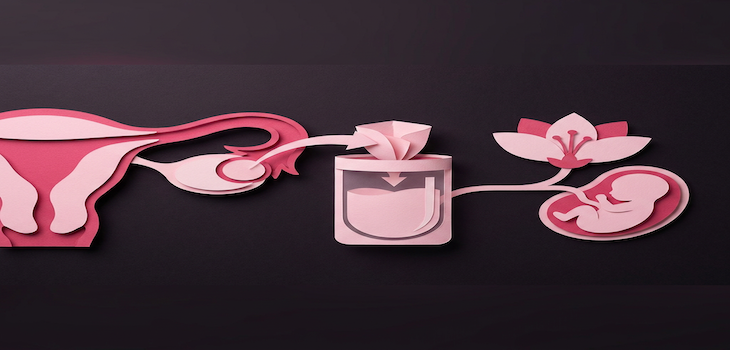
The ovarian cortex is the outer tissue of your ovary where immature egg follicles develop. The number and quality of these follicles contribute to your ovarian reserve—how many eggs you have available over time.
Your ovarian reserve can influence your AMH level, antral follicle count, and how your ovaries may respond to fertility treatment. Understanding these factors together can help your fertility specialist recommend an approach that makes sense for your individual circumstances rather than relying on any one number alone.
Your ovarian cortex contains the follicles that hold your reproductive potential. As you age, the number and quality of these follicles naturally decline.
Understanding your ovarian function can therefore give you a clearer picture of where you are now and help you consider what may be most appropriate for you next, whether that is fertility preservation, trying for pregnancy, beginning treatment, or continuing to monitor your ovarian reserve.
There is no single pathway that is right for everyone, and your results always need to be understood in the context of your age, health, plans, and priorities.
Egg freezing allows eggs to be collected and preserved at a particular point in your reproductive life.
During the process, your ovaries are stimulated with hormones so that several follicles can develop at the same time. The mature eggs are then collected during an egg retrieval procedure and frozen using vitrification.
The overall process is similar to the stimulation and egg-retrieval stages of an IVF cycle. Your ovaries remain intact; only the eggs collected during that particular cycle are frozen.
For many people, knowing that eggs have been preserved can provide additional reproductive options for the future. However, egg freezing is not a guarantee of a future pregnancy, and your individual chances depend on factors including your age when the eggs are frozen and the number and quality of eggs collected.
The answer is different for everyone.
Your age, AMH level, antral follicle count, health, and personal timeline all form part of the conversation.
If you're in your early-to-mid 30s, are not planning pregnancy immediately, and your ovarian reserve appears to be declining, you may want to discuss whether preserving eggs now could give you more options later.
If you're facing cancer treatment or another treatment that may affect ovarian function, fertility preservation may also be recommended before treatment begins.
You might also simply be uncertain about when you want to have children and want to understand whether egg freezing is appropriate for you.
On the other hand, if your ovarian reserve is very low and you are ready to pursue pregnancy now, your fertility specialist may discuss whether trying for pregnancy or beginning treatment sooner is more appropriate than delaying treatment for preservation.
The important point is that a low AMH result or a change in your ovarian reserve does not automatically dictate one particular decision. It is one piece of the wider clinical picture.
AMH gives your fertility specialist information about your ovarian reserve and the number of follicles that may remain. It does not, on its own, tell you the quality of your eggs or whether you can become pregnant naturally.
If your AMH is lower than expected, it may mean that fewer eggs could be retrieved during a stimulation cycle, but the result needs to be interpreted alongside your age and your antral follicle count on ultrasound.
This is why personalised assessment matters. One number rarely tells the whole story.
Yes. Eggs can be frozen and stored for future use.
One of the reasons people consider egg freezing is that the age of the egg is effectively preserved at the age at which it was frozen. For example, eggs frozen at 32 retain the characteristics associated with eggs collected at 32, even if you later choose to use them several years later.
For someone whose fertility timeline is uncertain or whose ovarian reserve is changing, this can offer an additional option for future family planning.
It is important, however, to remember that freezing eggs preserves an opportunity rather than guaranteeing a future pregnancy. Your doctor can help you understand what egg freezing may realistically offer based on your individual results.
Is ovarian cortex preservation the same as freezing my entire ovary?
No. Egg freezing involves stimulating the ovaries, collecting individual eggs, and freezing those eggs while your ovaries remain in place.
Freezing ovarian tissue is a separate fertility-preservation procedure and may be considered in specific clinical circumstances.
Will freezing affect my natural menstrual cycle?
Egg retrieval is designed to collect eggs developing during that stimulation cycle. After the treatment cycle is complete, your ovaries generally return to their usual pattern of function.
If you are concerned about how stimulation may affect your periods or ovarian reserve, your fertility specialist can explain what to expect before treatment begins.
What happens to the eggs I don't freeze?
Your ovaries continue their normal biological process after your egg-freezing cycle. Freezing eggs does not stop your natural reproductive ageing or prevent you from trying to conceive naturally in the future.
The eggs you do freeze remain in storage until you decide whether you would like to use them, continue storing them, or make another decision about them in accordance with your wishes and applicable regulations.
How long does the preservation process take?
Hormone stimulation commonly lasts around ten to twelve days, followed by egg retrieval. Suitable mature eggs are then frozen shortly after collection.
From the beginning of stimulation through to freezing, the process usually takes around two to three weeks.
What are my chances of pregnancy with frozen eggs?
There is no single pregnancy rate that applies to everyone.
Your chances depend particularly on your age when the eggs were frozen, the number of mature eggs collected, egg quality, sperm factors where relevant, and the laboratory and treatment circumstances when the eggs are eventually used.
Your fertility specialist can give you a more meaningful assessment based on your own age and ovarian reserve rather than a general statistic.
How long can frozen eggs remain viable?
Frozen eggs can remain in storage for many years when maintained under appropriate laboratory conditions.
The length of time they may legally remain in storage can also depend on the regulations that apply where your treatment takes place, so your clinic can explain the storage arrangements relevant to you.
At Janini IVF, your ovarian reserve, age, ultrasound findings, medical history, and future plans are evaluated together so that you understand what your options are and what each pathway may mean for you.
Schedule a consultation at +91 9717996655 / +91 9773926655 or visit www.janiniivf.com to discuss your fertility timeline, ovarian reserve, and whether preservation may be appropriate for your circumstances.
Last reviewed by Dr. Rutvij Dalal on Sep 01, 2026
Your email address will not be published. Required fields are marked *
If you like to have more information, let us connect. Please fill in the form below to learn about your Fertility status or scheduling an appointment with us.